
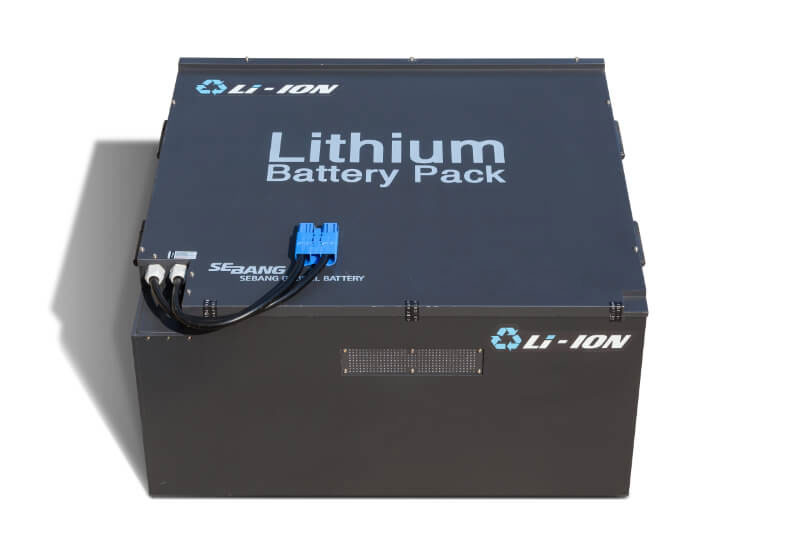
Lithium-Ion vs Lead-Acid Forklift Batteries: What Northeast Buyers Need to Know
A detailed forklift battery comparison for operations comparing total cost of ownership, charging efficiency, and maintenance — featuring the Hyundai B-X series and Big Joe lithium-ion lineup.
Choosing between lithium-ion and lead-acid forklift batteries is one of the biggest decisions a warehouse or distribution center can make. The right power source affects uptime, labor costs, floor space, and safety — not just the purchase price.
At Evolution Forklift, we spec the Hyundai B-X high-voltage electric series and the Big Joe integrated lithium-ion lineup for customers across Connecticut, Massachusetts, New York, and the broader Northeast. This guide breaks down the lithium ion forklift benefits that matter most to B2B buyers — total cost of ownership, charging efficiency, and maintenance-free operation.
Lead-Acid vs Lithium-Ion at a glance
Use this side-by-side comparison to evaluate which chemistry fits your shift pattern, labor model, and facility constraints.
Why lithium-ion wins on TCO
Lead-acid forklifts look cheaper on the invoice. But the real cost shows up in labor, maintenance, battery swaps, charging infrastructure, and shorter cycle life.
- No battery swaps — one battery stays in the truck
- No watering, washing, or acid spills to manage
- 2–3x longer service life reduces replacement cycles
- Higher energy efficiency lowers your utility bill
- Smaller charging footprint frees warehouse space
For a typical 3-shift operation, the total cost of ownership for a lithium-ion forklift is often 20–40% lower over a 5–7 year period. That is why the Hyundai B-X series and Big Joe lithium-ion models are becoming the default recommendation for high-utilization Northeast fleets.
5-year cost snapshot
Example: single forklift, 3-shift operation
Typical result: lithium-ion saves $6,000–$12,000 per forklift over five years.
Charge faster. Work longer.
Lead-acid batteries need an 8–10 hour full charge followed by a cool-down period. That means dedicated battery rooms, spare battery banks, and scheduled swap routines.
Lithium-ion forklifts can fully charge in 1–2 hours and accept opportunity charges during breaks. No cool-down. No memory effect. For 2- and 3-shift warehouses, that means the truck stays on the floor and the operator stays productive.
Maintenance-free means labor-free
Lead-acid batteries require weekly watering, terminal cleaning, and periodic equalizing charges. Miss the maintenance and you shorten the battery life — and create a safety hazard from acid spills and hydrogen gas.
Lithium-ion batteries are sealed and maintenance-free. No watering. No acid. No ventilation room. Your team can focus on moving product instead of maintaining power systems.
- Eliminate battery watering labor
- Remove acid spill and corrosion risk
- No hydrogen ventilation required
- No equalize charge scheduling
- Remote battery monitoring on many models
Lead-acid tasks you can eliminate
Switching to lithium-ion removes these recurring tasks from your maintenance team's schedule.
Lithium-ion models we stock and service
Evolution Forklift is an authorized dealer for Hyundai and Big Joe. These are the lithium-ion-powered lines we recommend most often for Northeast operations.
 HYUNDAI
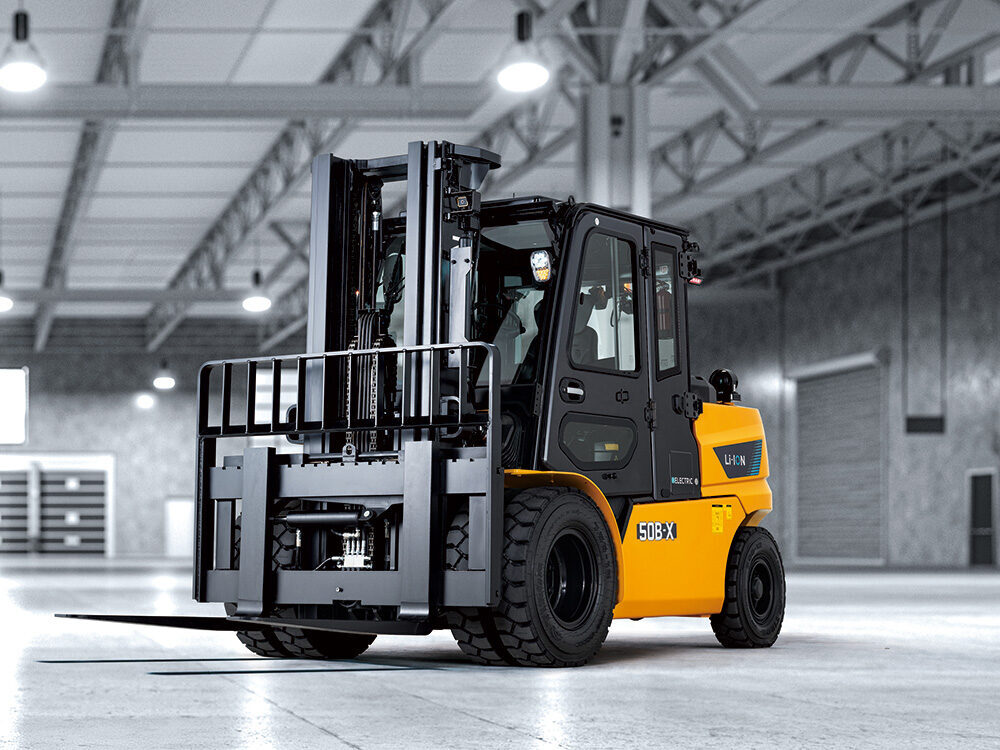
Hyundai B-X Series
High-voltage electric forklifts with lithium-ion compatibility. Power comparable to an IC truck, zero emissions, and fast opportunity charging. Ideal for indoor/outdoor yards and high-throughput warehouses.
View B-X specs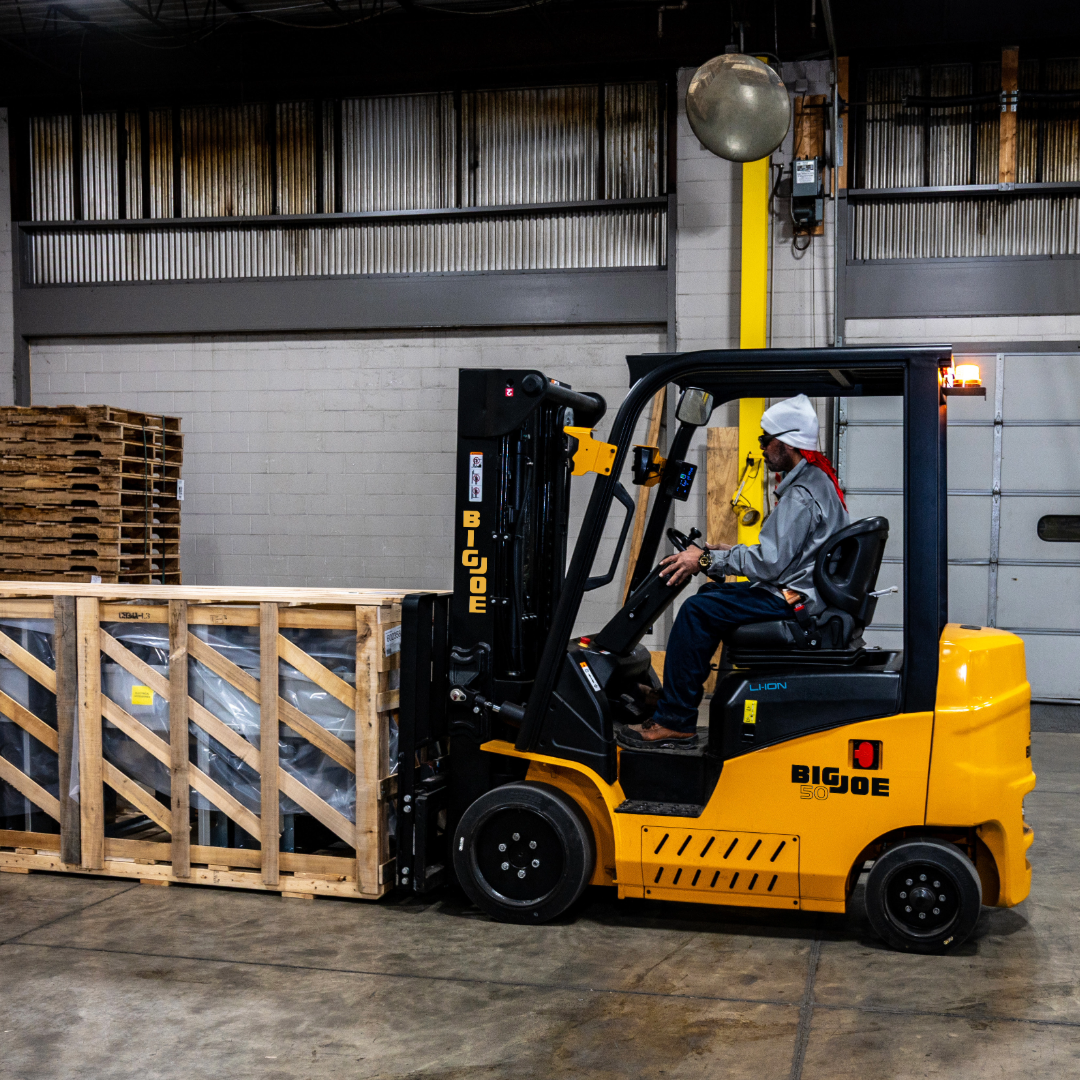 BIG JOE
Big Joe Li-Ion Forklifts
Integrated lithium-ion forklifts, pallet jacks, stackers, order pickers, and AMR robots. Designed around the battery from the ground up for fast charging and minimal maintenance.
Shop Big JoeWhich battery is right for your operation?
Choose lead-acid if...
- • You run a single shift with low utilization
- • Upfront capital is severely constrained
- • You already own battery rooms and swap equipment
- • Maintenance labor is already budgeted and available
Choose lithium-ion if...
- You run 2–3 shifts or high utilization
- Downtime and labor costs matter
- Floor space for battery rooms is limited
- You want lower total cost of ownership
Common questions about lithium-ion forklift benefits
Are lithium-ion forklift batteries worth the higher upfront cost?
For most multi-shift operations, yes. Lithium-ion batteries eliminate watering, equalizing charges, and battery swaps. They typically last 2–3 times longer than lead-acid and support opportunity charging, which reduces downtime. Over 5–7 years the total cost of ownership is usually 20–40% lower.
Can I opportunity-charge a lithium-ion forklift during breaks?
Yes. Lithium-ion chemistry has no memory effect and accepts partial charges without damage. A 15–30 minute break charge can add several hours of runtime, making lithium-ion ideal for 2- and 3-shift warehouses.
Do lithium-ion forklifts require battery rooms or ventilation?
No. Unlike lead-acid, lithium-ion emits no hydrogen gas during charging and does not need a dedicated wash or watering station. That frees up floor space and removes a major safety and maintenance burden.
Which Evolution Forklift models come with lithium-ion power?
We stock and service the Hyundai B-X high-voltage electric series and Big Joe's integrated lithium-ion forklifts, pallet jacks, stackers, order pickers, and AMR robots. Both lines are built around lithium-ion from the ground up.